is a stunning, plateau in southern Laos famous for its cool climate, cascading waterfalls, and lush coffee plantations, making it a paradise for nature lovers.
Rising dramatically from the lowlands of southern Laos, the Bolaven Plateau is a breathtaking geographic wonderland that captivates travelers with its distinct climate, dramatic topography, and rich agricultural heritage. Formed by an ancient volcanic eruption, this fertile, elevated plateau sits between 1,000 and 1,350 meters above sea level. This high elevation blesses the region with a refreshing, cool climate that stands in stark contrast to the oppressive tropical heat found across the rest of the country. This unique environment has made the plateau world-famous for producing premium organic Arabica and Robusta coffee, while also nurturing a vibrant tapestry of dense jungles and indigenous ethnic minority villages.
The primary gateway to this region is the southern hub city of Pakse. To get to the Bolaven Plateau, travelers typically rent a semi-automatic motorbike or hire a private driver in Pakse to embark on the famous “Bolaven Loop.” You can explore the plateau via two distinct routes depending on your timeline. The Small Loop covers roughly 200 kilometers along Route 16 and Route 20, taking two to three days. The Big Loop stretches over 320 kilometers, deeper into the remote eastern countryside via Sekong and Attapeu. Reliable local buses and shared songthaews also depart daily from the Pakse Southern Bus Terminal toward Paksong, the elevated coffee capital at the heart of the plateau.
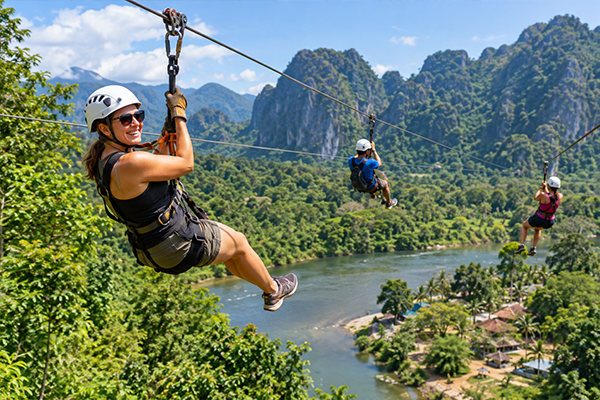
The plateau is heavily celebrated for its concentration of spectacular waterfalls and cultural immersion spots. Key places of interest include Tad Fane, a jaw-dropping twin-stream waterfall plunging over 120 meters down a sheer jungle canopy, where thrill-seekers can brave a high-altitude zipline. Nearby, Tad Yuang offers a pristine, tiered cascade complete with maintained walking paths and emerald swimming pools perfect for cooling off. For deep cultural insights, a stop at Tad Lo introduces travelers to three smaller, serene waterfalls alongside authentic, traditional villages inhabited by the Katang and Alak ethnic communities, where ancient agricultural practices remain a beautiful, focal point of daily life.
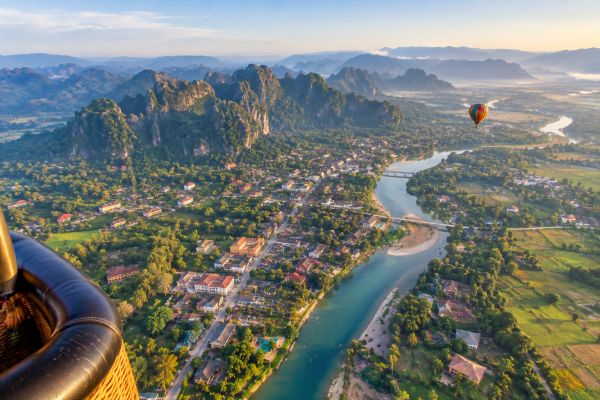
Vang Vieng
is a spectacular riverside town surrounded by limestone mountains, caves, lagoons and lush countryside, offering adventure, relaxation, kayaking, hiking and unforgettable natural scenery.
Located...
The 4,000 Islands
known in Lao as Si Phan Don, forms a tranquil Mekong archipelago in southern Laos, renowned for tropical scenery, peaceful islands, waterfalls, traditional villages and relaxed riverside...
Thakhek
The capital of Khammouane Province in central Laos, is a charming riverside town situated on the Mekong River opposite Thailand and known for its French colonial architecture, relaxed atmosphere...
Luang Namtha
the gateway to spectacular mountains, forests and ethnic villages. Its diverse hill tribes preserve distinctive traditions, crafts and ways of life, offering visitors authentic cultural experiences.
Luang...
Vientiane
the peaceful Laos capital, blends historic temples, French colonial architecture, vibrant markets, Mekong riverside charm, and relaxed local life, offering visitors a fascinating cultural and...
The Plain of Jars
Is one of the most truly mystifying megalithic archaeological landscapes in the world, renowned for thousands of massive, prehistoric stone vessels scattered across hillsides, hinting...